


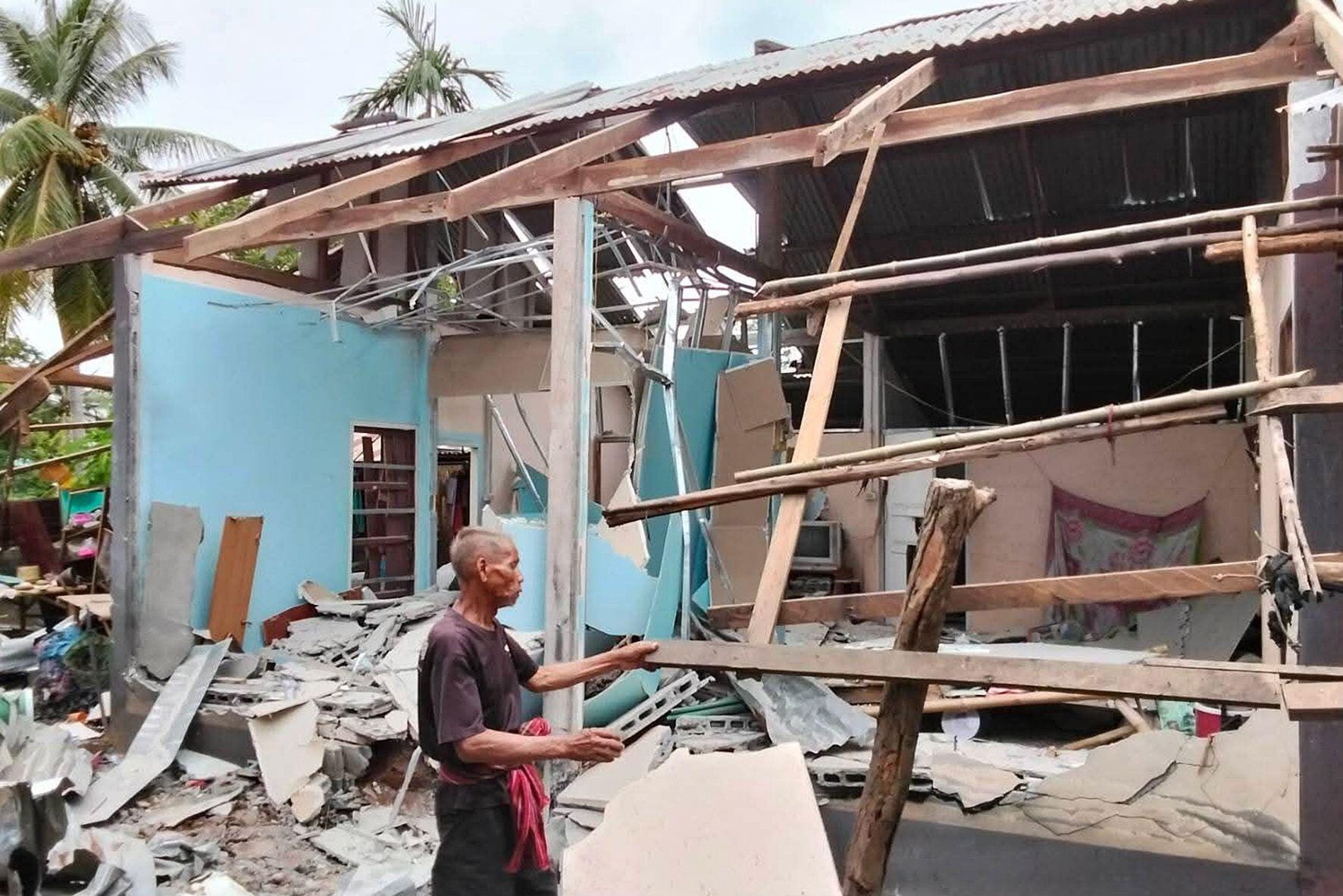
Thailand and Cambodia have traded heavy artillery fire across their shared border for a second consecutive day in the bloodiest military confrontation between the two Southeast Asian neighbours for over a decade.
“The situation has intensified and could escalate into a state of war,” acting Thai Prime Minister Phumtham Wechayachai warned reporters.
The spiralling border battle has killed at least 16 people in Thailand while Cambodia's government is yet to provide information on fatalities. Over 130,000 people from border towns have now been evacuated.
A Thai military official said today that skirmishes have been reported in 12 different locations along the border, up from 6 yesterday, indicating a widening of the conflict.
Thailand has accused Cambodia of deliberately targeting civilians by dropping rockets into residential areas, while Cambodia alleges that Thailand is using cluster munitions - a widely condemned ordinance. Each nation accuses the other of firing first.
Both sides have expelled the other’s ambassador and Thai authorities have sealed the 500-mile shared border entirely. Cambodia has even banned Thai movies and TV shows and stopped the import of Thai fuel, fruits and vegetables.
Relations between the neighbouring countries deteriorated sharply in late May after a Cambodian soldier was killed during a border skirmish between Thai and Cambodian troops.
But tensions have a far longer history. Behind the latest violence lies decades of nationalist rivalry and a border dispute that can be traced back to a 1907 colonial-era map.
The map in question, created during French colonial rule in Cambodia, was used to separate the two nations and Cambodia refers back to it in a bid to claim territory. Thailand, meanwhile, has long argued that the map is inaccurate.
One of the biggest points of contention is the 1,000-year-old Preah Vihear temple. In 1962, the International Court of Justice awarded Cambodia sovereignty over the temple area, much to Bangkok’s fury. The ICJ then reaffirmed the ruling in Cambodia's favour in 2013 but Thailand has rejected the court's jurisdiction.
The UN Security Council is set to hold an emergency meeting on the current confrontation later in New York, though Thailand’s foreign ministry has already rejected offers from the US, China and Malaysia to mediate a ceasefire between the rival nations. "We stand by our position that a bilateral mechanism is the best way out," foreign ministry spokesperson, Nikorndej Balankura, told Reuters.
Most analysts believe an all-out-war is unlikely, given the political risks of major escalation for both sides. Yet neither country seems prepared to back down just yet.
Caitlin Allen
Deputy Editor
ON REACTION TODAY
Tim Marshall
Countries across the globe are toughening their stance on migration

Gerald Malone
The Rake’s Progress: Glimmerglass pulls off this notoriously difficult opera

ALSO KNOW
UK to sign new AUKUS treaty - Foreign Secretary David Lammy and Defence Secretary John Healey are in Australia to sign a new 50-year bilateral AUKUS treaty. The AUKUS partnership between the UK, US and Australia, agreed in 2021, involves building nuclear-powered attack submarines and co-operating in other areas of defence. While the Trump administration has put it under review, raising fears it could pull out, the deal being signed today by the UK and Australia sets out the bilateral aspects of the partnership.
Starmer under pressure to recognise Palestine statehood - Over 100 MPs, led by Labour backbencher and International Development Committee Chair Sarah Champion, have signed a cross-party letter demanding that the Prime Minister recognise Palestine as a state. The letter asserted that British recognition would be “particularly powerful given its role as the author of the Balfour Declaration and the former Mandatory Power in Palestine.” This comes as Downing Street released a statement, calling Israel’s actions in Gaza “unspeakable and indefensible.” The pressure has also come after Emmanuel Macron confirmed that France would recognise a Palestinian state in September at a UN conference.
NHS five day walkout begins - Doctors in England started their five-day strike action today amid disagreement between NHS bosses and the BMA union over pay, with an estimated 50,000 walking out. The BMA has said that the 5.4 per cent pay rise awarded to doctors is not enough as it does not account for historical pay freezes.