


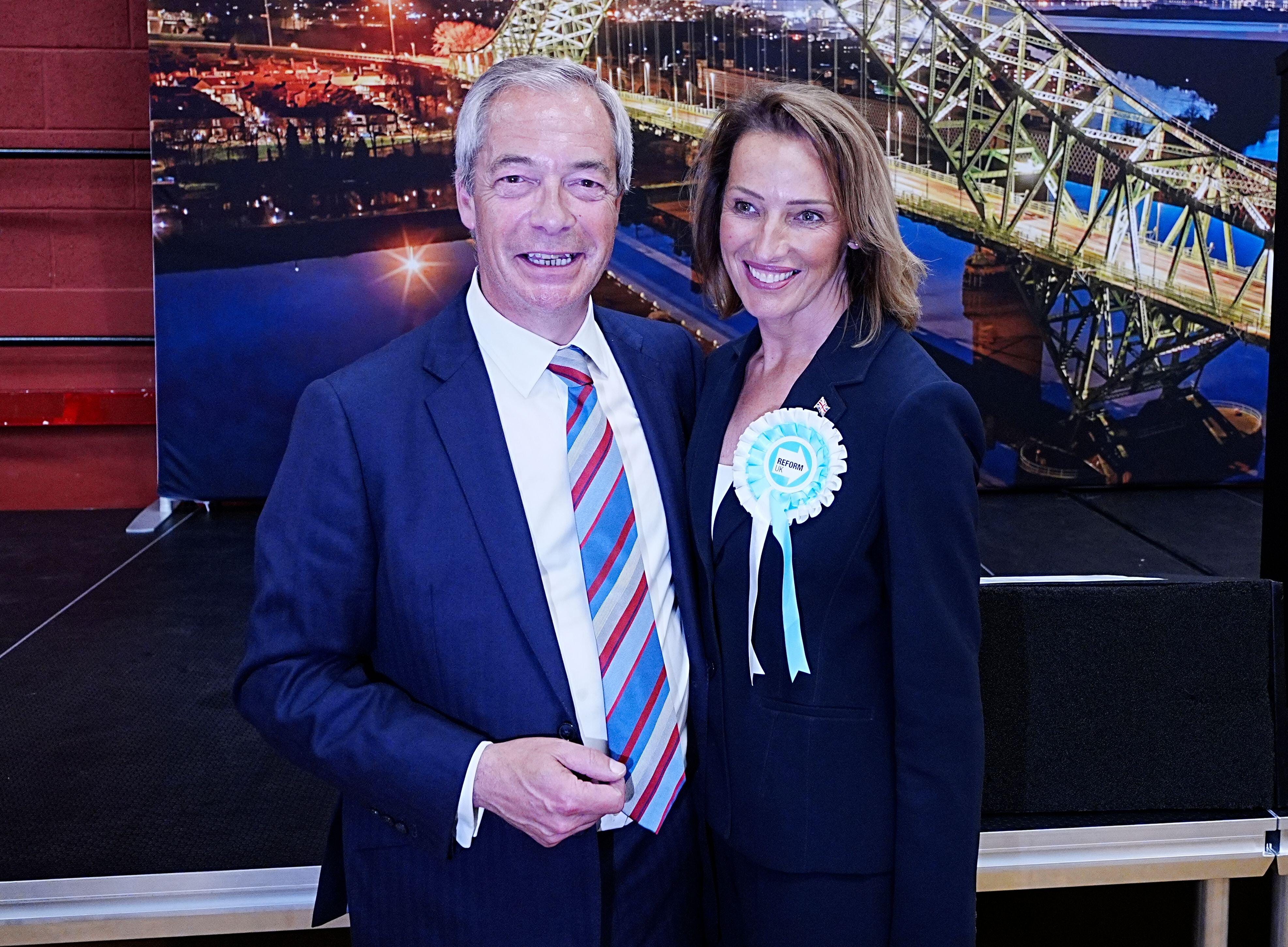
Nigel Farage’s insistence that he heads Britain’s “main opposition party” is that bit more grounded in reality this evening, after Reform UK gave both Labour and the Tories a drubbing in local elections, and swept to victory in the Runcorn and Helsby by-election.
Reform UK gained a new MP in Cheshire by the thinnest of margins: Sarah Pochin beat Labour’s Karen Shore by six votes, making it the closest by-election result since 1892.
Less than a year ago, Runcorn and Helsby was one of Labour’s most comfortable majorities. Meaning Starmer has failed his first electoral test since his landslide victory last summer. More than 250 Labour MPs would lose their seats if the 17.4 per cent swing to Reform in Runcorn was replicated across the country.
Elsewhere, Reform UK has seized overall control of seven councils - all but one of which were Tory-held, including in Conservative shires such as Staffordshire and Lincolnshire.
Reform has also gained its first mayor - in Greater Lincolnshire, where Andrea Jenkyns won nearly 40,000 more votes than her nearest rival - and it narrowly failed to oust Labour from the mayoralities in Doncaster, North Tyneside and the West of England.
According to polling guru Sir John Curtice, on the basis of today’s results, Reform UK has 30% of the projected national vote share, with Labour on 20%, the Lib Dems on 17%, the Conservatives on 15% and the Greens on 11%.
The Conservatives, who have made a net loss of at least 542 seats, show no sign of recovering their epic losses from last July. Yet gone are the days where a cataclysmic result for the Tories means an encouraging one for Labour, and vice versa.
Labour - just ten months into a five-year term - will be keen to learn the right lessons from Reform’s sweeping gains. Though there will be heated debate within the party over the direction it takes in response.
Some Labour MPs in Reform-facing seats are urging the government to see off the Farage threat by leaning into tougher policies on issues such as immigration - something Labour is already attempting to do: last month, Home Secretary Yvette Cooper was criticised by the left of her party for “pandering” to Farage after she announced plans to publish the nationalities of foreign criminals in the UK for the first time.
Yet moving to the right in the hope of holding off Reform certainly doesn’t seem to be working for Badenoch’s Tory party. And it could backfire far more dramatically for Labour, only alienating much of its existing base and playing into the hands of the Lib Dems and Greens, both of whom enjoyed local election gains today, albeit more modest ones than Reform’s.
Another problem for a centrist Labour party is that, on fiscal policies, Reform has considerable appeal to some former old-left Labour types.
A survey conducted last week by pollsters Find Out Now suggested that two-thirds of Reform voters back public ownership of sectors such as rail, water and energy. And Union shop stewards are backing Reform, with talk that some will even stand for Farage’s party.
We can expect tense debate within Labour over the coming days and weeks about what are the key takeaways from such a poor result.
As for one specific policy takeaway, the decision to slash the winter fuel allowance for pensioners appears to be haunting the government.
That’s certainly the view of Labour’s Ros Jones, who clung onto her mayorality in Doncaster by less than 700 votes. Jones blamed local anger at this attack on vulnerable pensioners for having pushed her victory over Reform to a knife edge.
This chimes with both polling from More in Common, which found that the Winter Fuel Payment – with almost 90 per cent of awareness the public - is the best-known Labour policy, as well as a Persuasion UK report which concluded that the pensioner fuel cut was the main reason for voters switching from Labour.
This short-sighted policy, announced by the government nine months ago now, appears to have left a damaging legacy.
Caitlin Allen
Deputy Editor
ON REACTION TODAY
Jenny Hjul
On Greenery, Blair gets it right again

Neil Collins
Empty threats about jailing bosses wont fix Britain’s water industry

Anthony Peters
Market rebound suggests investors think Trump will smell the coffee

Gerald Malone
Roméo et Juliette set Berlioz’s creative fuse fizzing

ALSO KNOW
Gaza ceasefire talks failed, says Cairo- Reports from Saudi Arabia, citing Egyptian sources, say that the latest round of negotiations for a ceasefire in the Gaza Strip have failed. This comes as Israel’s Defense Minister Israel Katz and IDF Chief of Staff Eyal Zamir approved plans to expand their military operation in Gaza.
Prince Harry’s emotional interview - Speaking to BBC News in California after losing a legal challenge against the UK government on the level of security he is entitled to in the UK, The Duke of Sussex said he "would love a reconciliation" with the Royal Family, adding that his father "won't speak to me because of this security stuff".
Washington approves weapon shipment to Kyiv - Donald Trump has reportedly approved his first shipment of American military equipment to Ukraine since assuming the presidency. The war in Ukraine will not end “any time soon”, warned his Vice President, JD Vance, hours after Washington and Kyiv signed a minerals deal.
Australians heading to the polls - Australians will vote for their next prime minister tomorrow. The latest YouGov poll has Labor winning 84 of the 150 seats in the House of Representatives.
AfD designated as an extremist group - Germany's spy agency has classified the far-right Alternative für Deutschland (AfD) as "extremist", enabling it to step up monitoring of the country's biggest opposition party, which decried the move as a "blow against democracy".
FIVE THINGS
South Korea has become a case study in how a thriving democracy can suddenly spiral into a constitutional crisis, and there’s no end in sight, writes Choe Sang-Hun in The New York Times
Reform’s by-election win outstrips UKIP record, writes John Curtice in The Times
The Critic’s Craig Drake on why insulting British cuisine is not just lazy, it is downright libellous.
Why Singapore’s election is a new test for the ruling party, in Bloomberg
Keir Starmer must find some courage before it’s too late, writes Sam Freedman in Prospect