


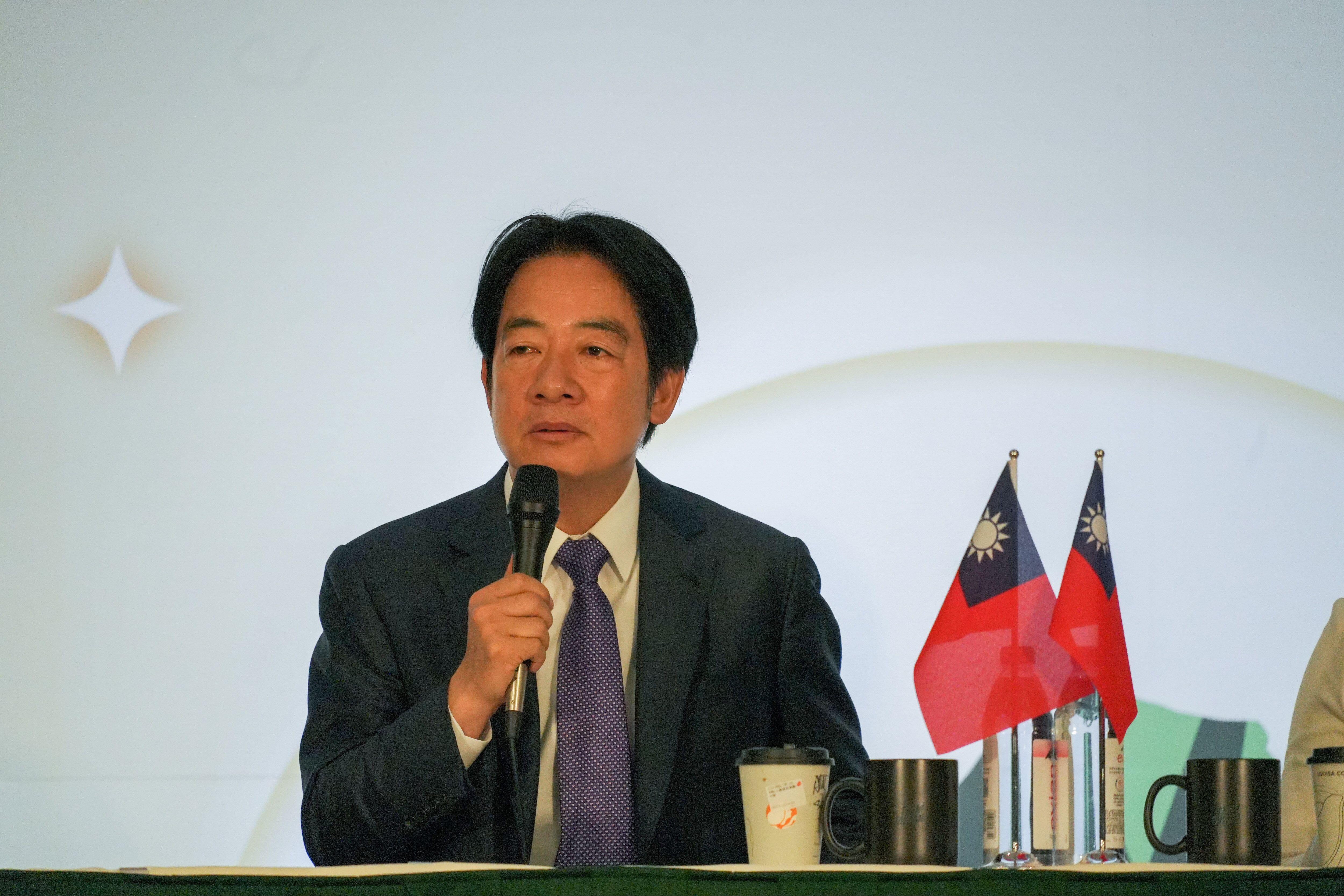
Taiwan’s President has suffered the second blow to his authority in the space of just a few days as he called off an overseas trip planned for next week, after Donald Trump reportedly blocked him from entering US soil.
Lai Ching-te had intended to stop over in New York on 4 August then Dallas 10 days later during his diplomatic tour to visit allies in Paraguay, Guatemala and Belize.
Now, all three trips have been called off. The official line from Lai’s office is that he needed to stay at home to focus on domestic issues such as typhoon recovery work. But, according to sources who spoke to the Financial Times, Lai’s travel plans were thrown into disarray late last week when Trump officials denied him permission to transit through the US after Beijing raised objections about the visit with Washington.
China claims the democratically governed island of Taiwan as its own territory - a claim Taiwan rejects - and refuses to engage with Lai, labelling him a “separatist” who spreads “heresy”. China wants to isolate Taipei on the global stage and regularly denounces any show of support for Taiwan’s independence agenda from Washington.
Like most countries, the US has no formal diplomatic ties with Taiwan and attempts to balance its support for the island with efforts to avoid provoking Beijing. It has, however, repeatedly stated that it would help defend Taiwan militarily in the event of a Chinese invasion.
While all of Taiwan’s sitting presidents since the 1990s have travelled to the US on stopovers, denying a Taiwanese leader the right to travel through America is not without precedent. In 2006, then-President George W Bush refused transit to Chen Shui-bian after he enacted a series of pro-independence policies that the Bush administration deemed too provocative.
This time, the refusal appears to have less to do with any recent development in Taiwan - and rather more to do with Trump’s trade agenda.
According to sources cited in The FT, US officials were concerned that allowing Lai to enter US soil could derail Washington’s ongoing trade negotiations with China.
China hawks have condemned the US President for undermining Taiwan’s security by reducing the self-ruled democracy to a trade-war bargaining chip.
Former US House Speaker Nancy Pelosi, whose 2022 visit to Taipei prompted fury from Beijing, warned that denying Lai permission to visit New York sends a worrying signal: “that the United States can be bullied by Beijing into silence on Taiwan”.
“Let us hope it is not indicative of a dangerous change in US policy”, she added.
This snub from Washington is the second setback Lai has suffered in recent days.
Over the weekend, more than a dozen lawmakers from Taiwan’s opposition KMT party survived the biggest ever attempt by campaign groups to remove them from office.
Taiwan is one of the few democracies in the world that allows voters to throw out elected representatives between elections by signing petitions.
On Saturday, 24 KMT politicians faced recall votes after campaign groups accused these “pro-China” lawmakers of undermining Taiwan's national security. But the majority of voters in all 24 districts subject to recall backed them.
The failed attempt to oust the lawmakers has emboldened Taiwan’s main opposition party, whose agenda includes forging closer ties with Beijing.
Lai, who only narrowly won last year’s presidential election, had hoped that the months-long recall campaign would unlock Taiwan’s political deadlock. While the Democratic Progressive Party leader won the 2024 presidency, such a tight victory meant that he ceded control of parliament. This has provided ample opportunity for opposition parties to thwart Lai’s agenda.
Some of Lai’s backers have accused KMT lawmakers of sabotaging Taiwan from within, and deliberately weakening the government to facilitate a Chinese invasion. The KMT party rejects claims that it is “pro-China”, insisting that it is simply towing a more pragmatic line and recognising that Taiwan cannot afford to have zero communication with Beijing.
The next presidential election is not until 2028, meaning the man who China deems a heretic is set to cling onto power for some time still. But, this week, amid snubs from Trump and the unexpected flop of the recall campaign, Lai has been weakened at home and abroad.
Caitlin Allen
Deputy Editor
ON REACTION TODAY
Gerald Warner
The Thai-Cambodian conflict may be a gamble in more senses than one

Giga Watt
Miliband's auction undermines the logic that renewables are cheaper than gas

ALSO KNOW
UK could recognise Palestinian statehood in September- Following an emergency meeting with his cabinet on the humanitarian crisis unfolding in Gaza, Keir Starmer announced that the UK will recognise a Palestinian state at a UN meeting in September unless Israel meets certain conditions beforehand. He said that the recognition will happen unless the Israeli government takes "substantive steps to end the appalling situation in Gaza", including committing to a ceasefire and a long-term peace process.
Gunman kills four in New York - A shooter has killed four people at a Manhattan skyscraper, including an NYPD officer. The 27-year-old gunman identified as Shane Tamura from Las Vegas went to a building which houses the NFL headquarters and financial firms, opening fire before turning the gun on himself. Tamura had a recorded history of mental illness.
Ukrainians killed in further Russian strikes - President Zelensky has said that at least 22 people in Ukraine, including three at a hospital in Kaminanske and 17 in a prison in Belinke, have been killed by Russian strikes overnight. Another 85 were injured in the attacks, with eight strikes launched against the Zaporizhzhia region according to its governor.
Trump calls out Starmer on North Sea tax hike - Donald Trump has hit out at Keir Starmer on Truth Social, hours after their meeting in Scotland, over taxes on North Sea oil. The US President insisted that the North Sea was a “treasure chest for the United Kingdom”, adding that the taxes make “no sense.”
FIVE THINGS
Russians worry what happens when the soldiers come home, writes Elvira Bary in The Spectator.
How the UK could reform the European Convention on Human Rights. Joelle Grogan in The Conversation.
Lee Cole asks in Prospect: How on earth can fiction respond to Trump?
Crimes rates really have fallen: the data is undeniable, Noah Carl says in The Critic.
You might be ghosting the internet. Can it survive? Thomas Germain BBC Future.