


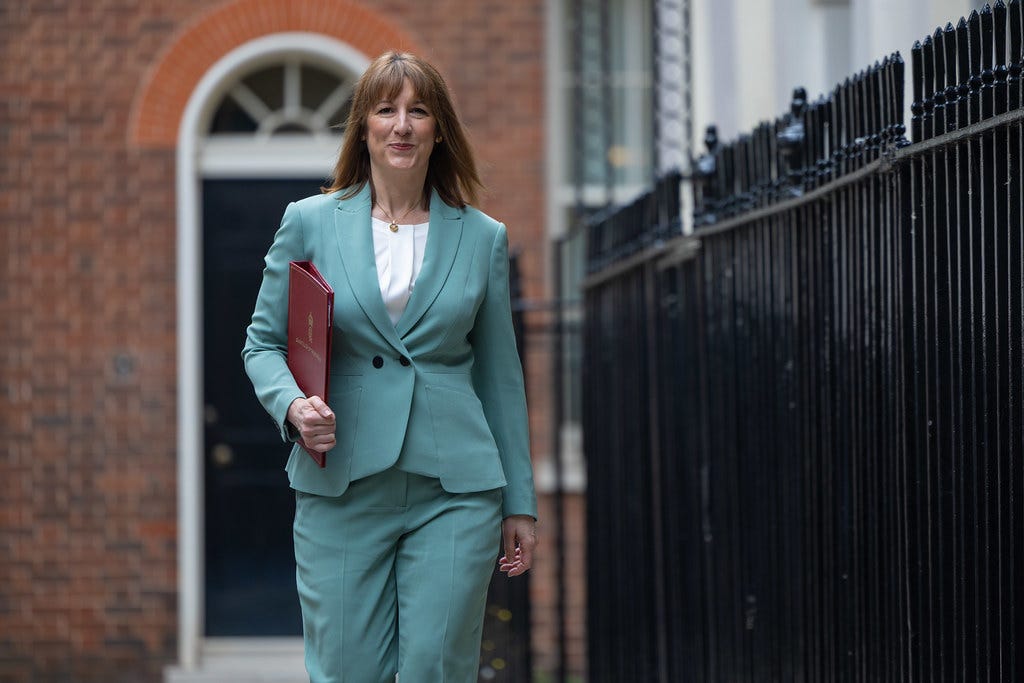
Shadow Chancellor Mel Stride has accused Rachel Reeves of delivering a “spend now, tax later” review, after the Chancellor laid out her long-awaited plan today to “invest in Britain’s renewal”.
Announcing her Spending Review this afternoon, Reeves conceded that too many voters in Britain were “yet to feel” the benefits of her economic plans. “My task, and the purpose of this review,” she added, ”is to change that”.
The Autumn Budget - which contained £40 billion worth of tax rises and a big increase in borrowing - was the incoming Chancellor’s chance to show how she would raise money. Today’s spending review, in contrast, was where she set out how that money would be spent. Meaning it was an attempt to reassure disgruntled voters that they will be rewarded for unpopular choices she made back in October.
The review largely involved Reeves allocating a £113 billion boost to capital spending over the next four years, funded by her decision last year to do away with the government’s existing debt rules, freeing up billions in the process to borrow more for investing in infrastructure projects.
There were few surprises today. Most announcements were leaked in advance or - in the case of the defence spending boost to 2.6% of GDP by 2027 - revealed months ago.
Defence aside, the biggest winner is the NHS which will receive a record cash investment, equivalent to a £29 billion increase in day-to-day spending. Expect more details in the coming weeks when the government publishes its 10-year plan for NHS renewal.
While health has secured the biggest funding increase in cash terms, the Department for Energy Security and Net Zero has got the biggest funding increase in percentage terms. If you compare growth between 2023-24 and 2028-29, then spending in Ed Miliband’s department is going up 16%. This is in part thanks to Reeves pledging a £30bn investment in nuclear energy.
The Chancellor also promised the “biggest cash injection for social and affordable housing in 50 years” by ploughing £39 billion into Angela Rayner’s housing programme over the next decade.
Other investments in long-term projects include £15bn for trains, trams and buses outside London and a £4.5bn boost for schools.
The Chancellor insisted she has rejected austerity as she confirmed that total departmental spending will grow by 2.3 per cent over inflation per year. Though some departments will have their day-to-day budgets cut - such as the Home Office by 1.7 per cent and the Foreign Office by a hefty 6.9 per cent, largely thanks to the cuts to Britain’s foreign aid budget to fund the defence spending hike.
While Reeves was under pressure in the lead-up to today as departments wrestled for their fair share of funding, this was the comparatively easy part.
The tricker task comes in the Autumn, when she will have to re-establish how she intends to fund her spending plans.
Since last October, the cost of borrowing has shot up significantly, amid global bond market jitters over Trump’s erratic trade wars and rising government debt. Reeves is also contending with sluggish economic growth and she needs to find the money to fund her U-turn on pensioner fuel payments.
Against this backdrop, economists appear almost unanimous in their warnings that, unless the Chancellor abandons her “iron clad” fiscal rules, the only way to square the circle will be a fresh wave of tax rises in the next Budget.
As Nigel Green, CEO of deVere Group puts it, “Reeves is spending money she hasn’t got — and the tax reckoning will come this autumn.”
Speaking of unfunded promises, Reeves launched an attack today on Nigel Farage and his party’s plan for unfunded tax cuts. “They are simply not serious,” said Reeves of Reform UK, insisting Farage was “itching” to have his own Liz Truss moment.
Farage stands accused of “fantasy economics” after he outlined Reform’s economic programme last month, which promised to slash taxes, restore winter fuel payments, scrap the two-child benefit, amongst other popular policies, with scant details on how to pay for them. The IFS estimates there is an £80bn black hole in the plans.
And yet a week ahead of the Spending Review came polling from More in Common, showing Reform and Labour are now tied - on 22 per cent each - when it comes to which party the public trusts most on the economy.
We’ll soon find out if the Spending Review has done anything to shift the dial in Labour’s favour. But we can expect more jibes likening Reform to “Trussonomics on steroids” as the government attempts to undermine Farage’s fiscal credibility.
Caitlin Allen
Deputy Editor
ON REACTION TODAY
David Waywell
LA unrest is something of a charade for Trump

Giga Watt
Why North Sea oil and gas is likely to be Labour’s next U-turn

ALSO KNOW
UK government to decriminalise rough sleeping - Rough sleeping will be decriminalised next year after 200 years with ministers planning to scrap the Vagrancy Act in favour of new legislation targeting organised begging and trespassing, the UK government has confirmed. According to Shelter, homelessness has risen by 14 percent over the last year.
Tariff deal with China agreed, says Trump - Following talks between officials in London, a US-China tariff agreement has finally been reached, claimed US President Donald Trump today, though he added it was “subject to final approval with President Xi and me”.
Abbas calls for Hamas to surrender - The Palestinian Authority President Mahmoud Abbas has said that Hamas “must hand over its weapons” to allow for international forces to be deployed to protect the Palestinian people. In a letter to French President Emmanuel Macron, Abbas outlined steps that must be taken to achieve peace in the region, saying he was “ready to invite Arab and international forces to be deployed” to Palestine as part of a UN stabilisation mission.
Iran says it will target US bases in event of conflict - Iran has said it would target US military bases if a conflict broke out over its nuclear enrichment. This comes as Donald Trump said earlier today that he was “less confident” about reaching a nuclear deal with Iran and that the US would be prepared to resort to military action if talks fail.