


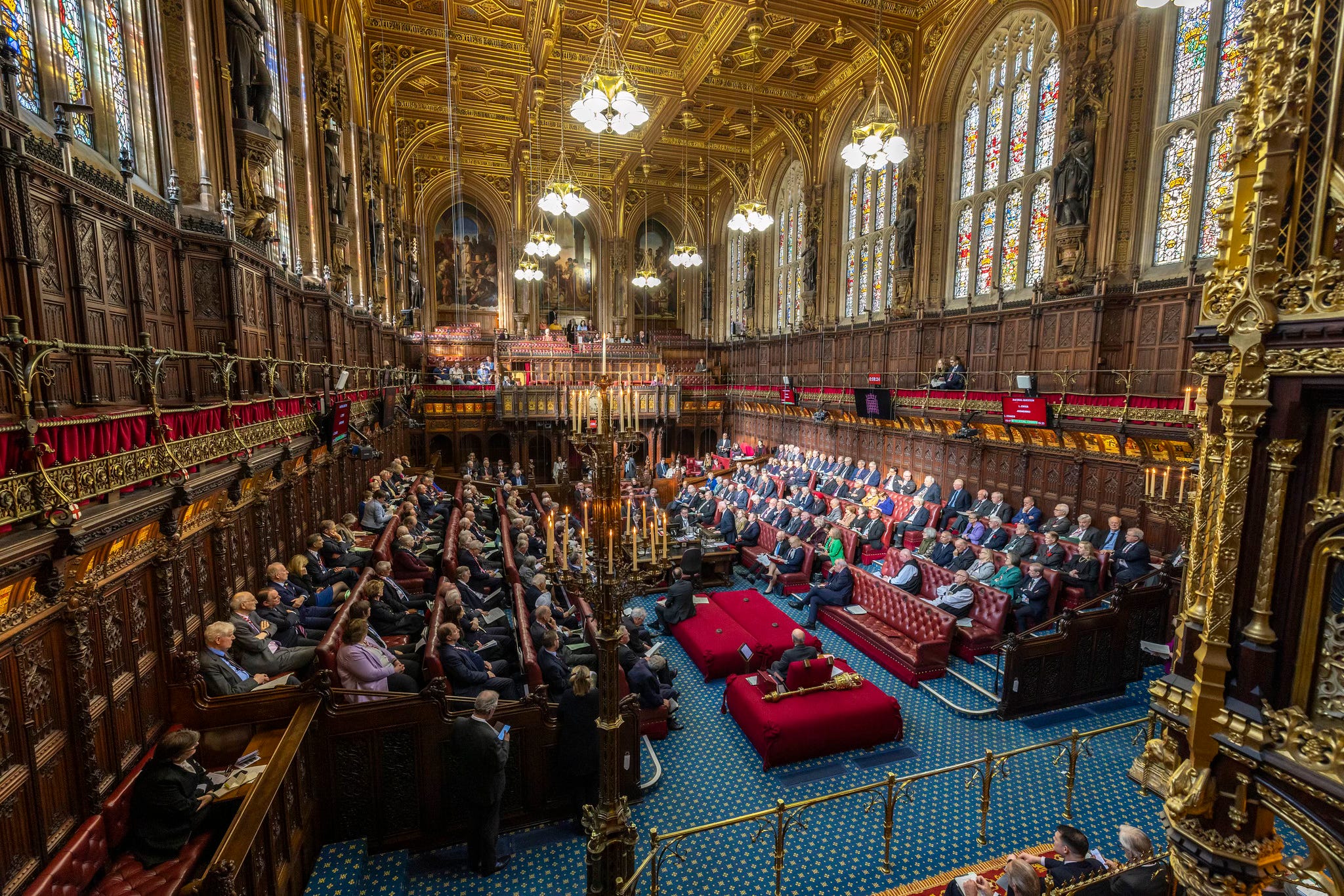
One news story always comes round with the arrival of the summer recess in Westminster.
Members of the House of Lords gently remind us that, as legislators, they work harder than MPs. They sit for longer and take shorter holidays. As usual, the Lords is sitting for a few days longer than the Commons this July. When they come back, the Lords will take fewer days off for party conferences and the half term break.
Peers, of course, do not have constituencies to attend to – though the expertise which they hope to offer depends on many of those active in the upper house also having other demanding jobs in the private, public and charitable sectors.
This year, their lordships are putting in the hours in parliament to the point of overload.
Unlike MPs, Lords have not adopted a “family friendly” working pattern. For months now, they have been sitting late into the night, three or four days a week, with three-line whips mandating attendance. Friday sittings are becoming common. This pressure of business is unprecedented and is expected to last until the end of this year at least.
There may not be much public sympathy for those elevated to “the best club in London” but the breakdown of “normal channels” to manage business in the Lords amounts to a massive and exhausting waste of time for everyone involved, including ministers. The likes of science minister Patrick Vallance, for example, surely have better things to do than hang around idly into the small hours waiting for votes to be called, or not called.
Frustration is widespread among the Lords’ lobby fodder and it is unlikely to dissipate over the summer. Not least because frequent clashes over votes are ultimately redundant. Labour’s massive majority in the Commons simply reverses any unwelcome message sent down from the red leather benches.
Stubbornness, stupidity, lack of ambition and self-interest on all party-political sides are to blame for the deterioration of relations in the Lords, which threatens to undermine its traditional function as the more considered and less partisan branch of the legislature.
The immediate cause of the breakdown is Sir Keir Starmer’s determination to abolish the remaining 90 or so hereditary peers. The House of Lords (Hereditary Peers) Bill is now going through parliament.
The new Labour government is in a much weaker position to get its legislation through without hassle in the Lords than the previous Conservative governments.
The Tories may have been hammered in last year’s general election but they remain the largest party group in the upper house. After fourteen years of Conservative government, Tory Lords also developed an arrogant reflex to get their own way in the upper chamber.
The Conservatives can easily defeat Labour in the Lords, especially when joined by the Liberal Democrats. Their ability to do so, quite possibly in an ambush, is what is keeping Labour Lords up late in the Palace of Westminster night after night.
Attempts to broker a truce between reasonable men and women have failed.
The Conservatives rejected an early offer for the hereditaries simply to die out by not being replaced in exclusive by-elections of their peer group (sorry!) when vacancies occur.
Now with their socialist hackles up, the Labour faction are refusing a compromise to covert the dozen or so Tory hereditaries presently on the front bench into life peers.
It is easy to see why the Conservatives don’t like the change. Over half, 46, of the 92 so-called “excepted hereditary peers” who are set for the chop are Tories. Another 33 are cross benchers. Labour and the Liberal Democrats have only four each.
Even after this bill goes through, the Conservatives will still be the single largest group in the Lords with a voting strength of some 240, compared to 210 for Labour, 150 cross benchers and 70 Liberal Democrats.
So the hereditaries are gone, not much will change in the balance of power in the Lords except the toxic partisan ill will now being generated. The Lords will still have 719 members, including 26 Church of England bishops.
The suspicion must be that both party leaderships are happy to engage in this token fight, while avoiding the really difficult issue of full reform of the unelected second chamber.
The arrangement to keep 92 hereditaries with voting rights was struck in 1999 by the Blair government. The then Lord Cranborne, now Marquis of Salisbury, struck a deal with Alastair Campbell, much to the embarrassment of William Hague, the Tory leader at the time. Then, as now, Labour’s plans fell far short of the wholesale reform of the Lords which it keeps promising in each election manifesto.
The convenience of patronage through appointing life peers and the self-interest of those now in the Lords, tend to reduce a Labour prime minister’s reforming zeal to merely kicking the hereditaries. The case can always be made that there are more important matters to fix, nonetheless when it comes to Lords reform Labour has repeatedly ducked manifesto commitments.
Change, Labour’s 2024 manifesto, promised “immediate modernisation” and “long-overdue and essential reform”. A key proposal was mandatory retirement for peers at the age of eighty. That has been dropped. No surprise there. At least 54% of Labour’s peers are already over 80 – the highest proportion of any party group.
The Labour leadership is now adamant that there should be no further debate over Lords reform once the hereditaries are out. They will give no succour to an amendment that Labour should revisit its manifesto pledges on constitutional reform this side of the next general election even though the amendment has been proposed by one hereditary who accepts his fate - the Duke of Wellington, a former Conservative MEP turned cross-bencher.
Compared to MPs, members of the House of Lords are not expensive. Lords can claim a tax free allowance of £371 for each day they are present in the chamber. Those based outside Greater London are also entitled to £100 overnight allowance plus travel expenses. In a typical year the House of Lords sits around one hundred days.
The current confrontation is costing the taxpayer more because members have to attend more often. Whips are advising “bring your car in” because there is little public transport after midnight. Officially Labour has long considered the House of Lords “not fit for purpose”. The procedural purposes it is being put to are not sensible either.
Given the patchy attention span of the modern House of Commons for the work of legislation, the existence of second chamber for scrutiny and revision seems a sensible precaution.
In my opinion, it does not need greater powers than at present so members should not have the mandate of being directly elected. They could be appointed or indirectly elected from party lists, based on percentage shares in votes at other elections.
Probably much the same sort of people as now would end up in the reformed Lords – though younger.
Much has been made of the exercise of patronage by David Cameron and Boris Johnson to ennoble younger members of their staff, especially women. In practice the likes of Baronesses Liz Sugg, Gabby Bertin and Charlotte Owen are proving successes. They are bringing a freshness to the elderly House and an awareness of contemporary issues which were in danger of being overlooked. In spite of the relatively low “pay”, these ladies seem to want to make a career out of it.
As has been the case so often with this new government in other areas of policy, the ordering up of the tumbrils for the hereditaries may scratch a partisan itch while falling far short of delivering the worthwhile Change that was so comprehensively promised.
Meanwhile life has been made more difficult and less productive for those most directly concerned – all members of the House of Lords.