


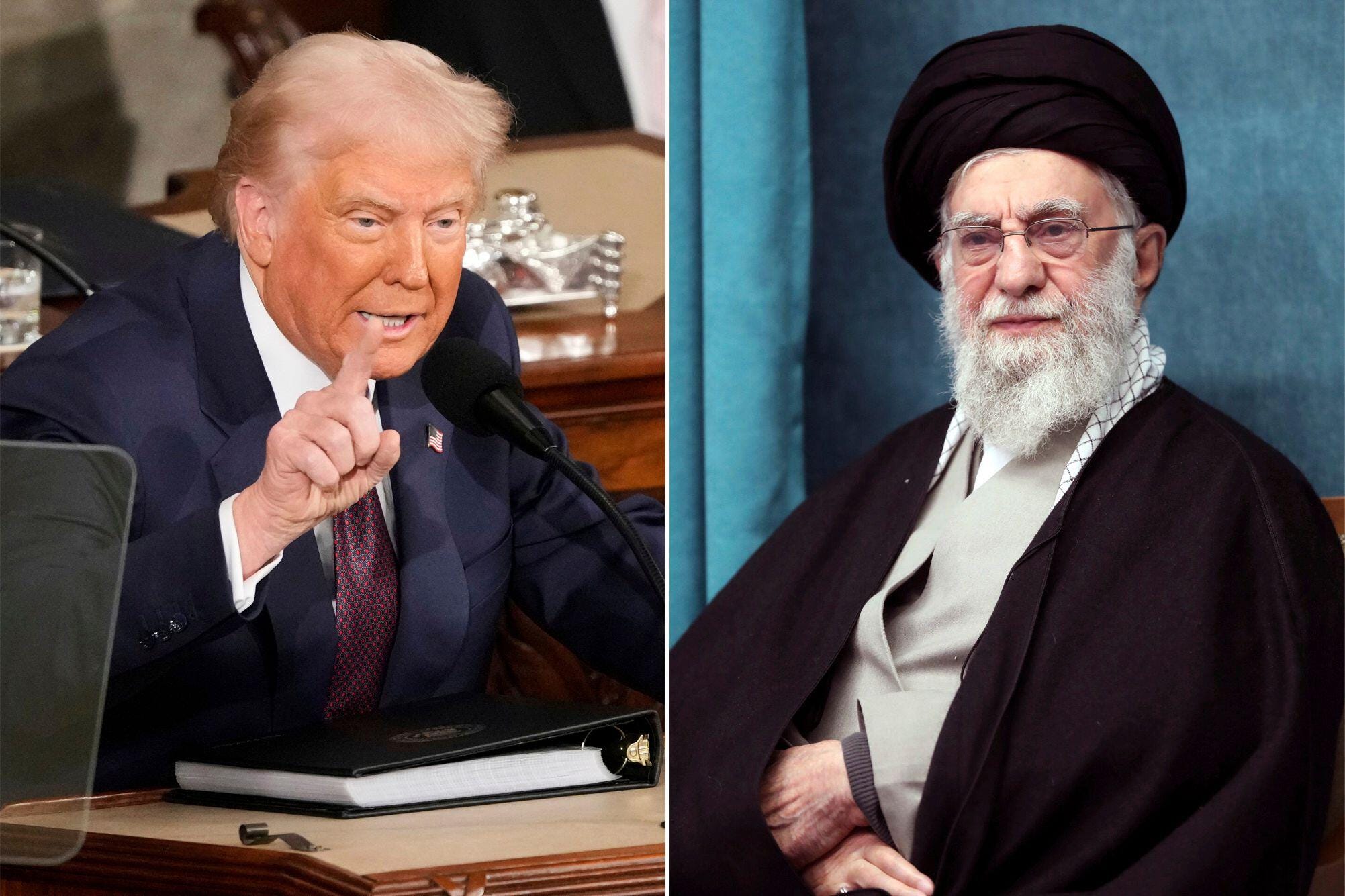
This is Tim Marshall’s Friday’s column on geopolitics for Reaction, free to read this week. Upgrade to paid to read Tim every week and to get Iain Martin’s newsletter tomorrow.
At the fifth round of negotiations between Iran and the US, each side has a red line. The problem is that Tehran’s version signals “No Stopping!” while Washington’s means “Stop Here!”.
After four rounds of talks since 12 April, the two sides are now meeting in Rome with Oman again acting as the main mediator. The challenge is one of how to dilute the positions of each side, both seemingly painted in bright red thick lines. The answer to the question of how many more opportunities they will be given is unknown. Watching and waiting for the outcome are the Israelis.
Both red lines are about Tehran’s enrichment of uranium-235. Iran says it is for peaceful civilian purposes, but many countries believe that’s a cover for building nuclear weapons. This week, Iran’s Supreme Leader Ayatollah Khamenei explicitly ruled out Washington’s demand for zero enrichment, a position his diplomats describe as “non-negotiable”. On the other side, Washington’s chief negotiator Steve Witkoff (aka “Envoy for Everything”) told ABC News that the Trump administration “cannot allow even 1% of an enrichment capability”.
The Iranians say they are willing to discuss the scale and grade of enrichment in return for the lifting of some sanctions. To power a nuclear reactor, uranium-235 must be enriched to 3.67% but, according to the International Atomic Energy Agency, Tehran has been producing large quantities of 60% enriched uranium, a level from which it is relatively easy to get to 90% enriched weapons-grade material. The Americans say they are willing to discuss Iran importing uranium already enriched to levels for civilian use.
Ahead of the first round of talks, President Trump was reported as setting a 60-day deadline for negotiations to succeed, although it wasn’t made clear if that was 60 days from him sending a letter to the Iranians, or from when the talks began. Friday’s meeting marks 40 days since the latter.
This week, both the Axios news site and CNN reported that American intelligence agencies believe Israel is readying to strike Iran unilaterally if the talks fail. The reports suggested that intercepted Israeli communications and the monitoring of the movement of munitions indicated preparations for an attack.
However, Israel has just concluded a military air exercise which involves such movement, and it has in the past conducted rehearsals in case a decision is ever made to go after Iran’s nuclear industry. It’s also possible the Americans, and or Israelis, are deliberately leaking potentially bellicose behaviour to pressure the Iranians. Either way, the price of a barrel of Brent crude oil rose by almost a dollar.
There are reasons to believe Israel might unilaterally hit Iran this year, and reasons to doubt it. Doubts are raised because it’s thought Israel lacks the military capability to do more than severely damage, but not destroy, the multiple sites it would need to attack. Its mid-air refuelling capacity might not be able to cope with the range jets would need to fly, and it may not possess enough of the massive bunker-busting bombs required. When the Iranian sites were repaired, Tehran would be tempted to go for “break out” – a rapid advance to nuclear weapons.
Also, if Israel attacked, it would have to ask the US for help in defending against Iranian retaliation amid risks the conflict would spread. President Trump, who currently favours diplomacy, does not have a track record of wanting to get involved in wars and, if he had not given approval for the attack, would be angry at the spike in oil prices which would follow. That could ruin Prime Minister Netanyahu’s relationship with an American president who has almost a full term to serve.
On the other side of the ledger – the Iranians appear weaker than for many years. Sanctions have helped put the economy in serious trouble, and the defeat of Hezbollah and collapse of Iranian power in Syria has put it on the back foot. Iran’s air defences are thought to have been seriously damaged during last year’s retaliation for Iranian missile attacks on Israel. It’s also possible the White House would approve of Israeli action in advance and give covert assistance.
There’s also the issue that the Israelis regard this as an existential matter. No-one knows if Iran would really attack Israel with a nuclear weapon – but because of Israel’s history, the temptation not to find out could be a deciding factor.
If the US-Iranian talks collapse, we will enter a dangerous period. The Iranians would debate if they should race to “break out” to prevent an attack, and the Israelis would ask themselves if they can wait to find out Tehran’s decision. If there is no progress in Rome, we will be closer to that scenario.
