


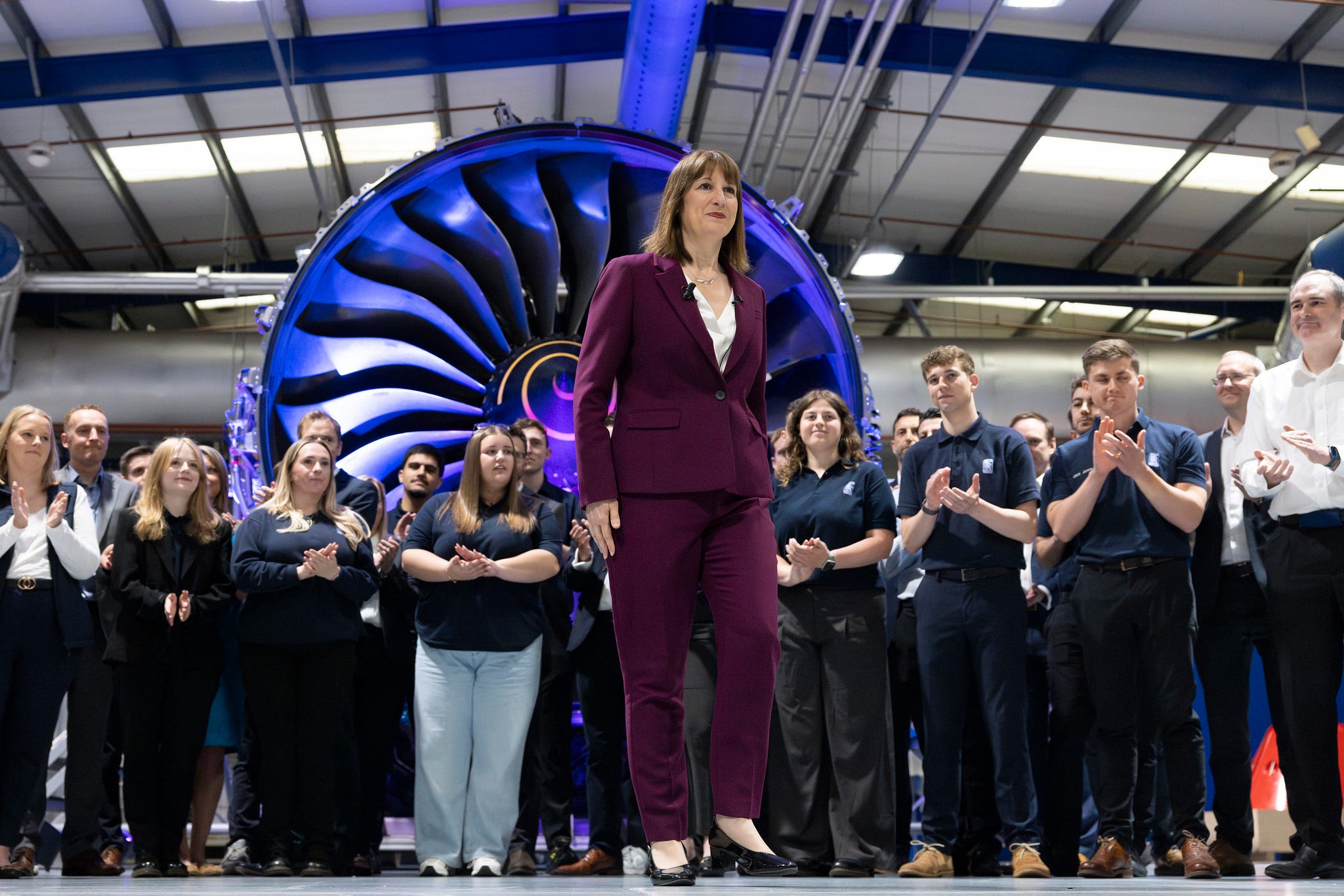
The UK economy is "beginning to turn a corner", announced Rachel Reeves today, after unexpectedly strong growth data gave her some much-needed - but potentially brief - respite.
According to new ONS figures, the UK economy grew by 0.7 per cent in the first three months of 2025 - its fastest rate in a year, outpacing the US, Canada, France, Italy and Germany.
Decent growth was recorded across both the services and manufacturing sector - of 0.7 per cent and 1.1 per cent respectively. Crucially, even GDP per capita - which takes population growth into account making it a more accurate measure of any change in living standards - returned to growth of 0.5 per cent after contracting for two consecutive quarters.
This upbeat GDP data is a welcome bounce back from the decidedly poor growth figures recorded during the second half of 2024. And Britain would outperform its G7 peers if this pace were maintained across the rest of the year. That, however, is unlikely.
Economists polled by Reuters today expect growth to slow to 0.2 per cent in the second quarter and remain at that pace for the rest of 2025.
Why so?
For starters, because the GDP figures released today cover the period from January to the end of March, before Donald Trump’s “liberation day” tariffs unleashed global turmoil at the start of April.
Despite Britain securing a trade deal with the US, Trump’s tariff policy will hit UK growth because the blanket 10% levy still applies to most British goods entering the US.
The fact that the first quarter’s stronger-than-expected growth was recorded in the run-up to “Liberation Day” is also relevant in that it suggests today’s set of data may not be indicative of any enduring pattern. Some of the growth was generated by a mad rush amongst businesses to stockpile or manufacturers to sell to the US before the anticipated tariffs hit.
That said, the decent growth in the services sector too shows that the sunny data isn’t solely explained by frenzied activity to get ahead of tariffs. After all, the UK's services sector - covering industries such as retail, hospitality and finance - was never subject to tariffs in the first place.
Trade tensions aside, another reason why growth is expected to dip in the next quarter is because today’s figures cover a period before a big jump in employment costs came into effect in April.
While the UK government’s decision to increase National Insurance contributions for employers is expected to raise £25 billion, it is also forcing businesses to reckon with higher costs, meaning it may well hit growth. More up-to-date labour market surveys do indeed point to an economic slowdown since the April tax and tariff changes came into effect.
Then again, it would be counter-productive to be too cynical about this “one-off” set of sunny growth data. After all, optimistic headlines will help to lift consumer and business confidence, in turn helping the UK economy to sustain the momentum.
Caitlin Allen
Deputy Editor
ON REACTION TODAY
Gerald Warner
The traditional rituals initiating the pontificate of Leo XIV

John Freeman
Malinowski is unremitting in his exposure of Hohenzollern Nazi-era culpability

ALSO KNOW
Trump claims US-Iran nuclear deal is close - The US President said today that “very serious” negotiations are underway with Iran over a deal that would intend to secure “long-term peace,” and that Tehran has “sort of agreed to the terms.” There are still several gaps, according to Iranian sources, but US oil prices have fallen by $2 on the expectation of an agreement.
Merz promises Europe’s strongest army - Germany’s new Chancellor Friedrich Merz has pledged to build “the most powerful conventional army in Europe,” in his first address to the Bundestag today. Germany’s friends and partners do not only expect it but are “demanding it”, he insisted, as he reasserted Germany’s role in providing military aid to Ukraine.
Trump reacts to Putin’s peace talks snub - Donald Trump has said that nothing will advance in terms of peace between Russia and Ukraine until he himself meets with Vladimir Putin, after the Russian leader refused to attend talks with Volodymyr Zelensky in Istanbul. The Ukrainian President arrived in the Turkish capital on Thursday hoping to hold constructive talks, but a lower-level Russian delegate was sent by Putin instead.
UK may send rejected asylum seekers abroad - Britain is in talks with other countries to set up overseas "return hubs" for failed asylum seekers, Sir Keir Starmer said today on his first official visit to Albania. He would not comment on which countries were involved, or where failed asylum seekers could be sent, but Albania said it was not part of the talks.
FIVE THINGS
What to expect from Reform-run councils. The Covert Councillor in Prospect.
James Snell in Engelsberg Ideas on Trump’s Syrian deal like no other.
Romanian wild card George Simion is setting the EU’s nerves on edge. POLITICO on how the presidential front-runner’s hostility to Ukraine is creating a rift with fellow European conservatives.
The urgency of the drone wars is passing us by, writes Juliet Samuel in The Times.
David Bromwich on ten years and a hundred days of Trump, in Compact.