


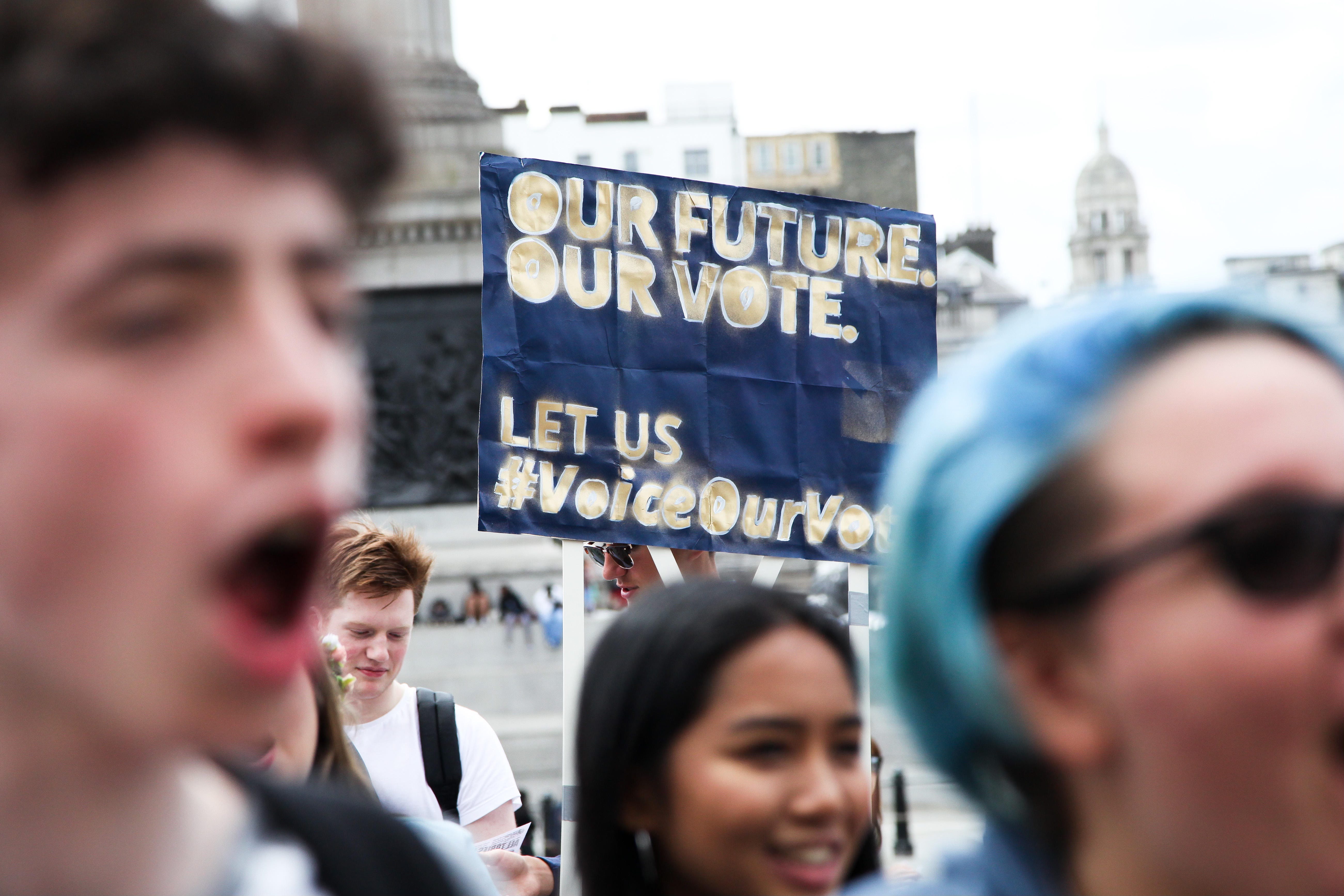
The Tories have accused Keir Starmer of “shameless gerrymandering” after the UK government confirmed today that the voting age will be lowered to 16 across Britain in time for the next general election.
The government insists the change - which amounts to the biggest electoral shake-up since 1969 when the voting age was reduced from 21 to 18 - is a boost to democracy. If 16 and 17-year olds can already contribute to society by working and paying taxes, “it's only right they can have a say on the issues that affect them”, insisted Starmer.
While Austria is the only country in Europe so far to have lowered the voting age for national elections to 16, it’s worth remembering that the change will bring England and Northern Ireland in line with Scotland and Wales, where those aged 16 and 17 are already able to vote in Holyrood, Senedd and local council elections.
The Liberal Democrats have backed the government’s electoral reform, describing it as a "no-brainer", while the Tories and Reform are against lowering the voting age.
Conservative shadow minister for Housing, Paul Holmes, reacted to the announcement in the Commons today, asking: "Why does this government think a 16-year-old can vote but not be allowed to buy a lottery ticket, an alcoholic drink, marry, or go to war, or even stand in the elections they're voting in?".
Perhaps the biggest Tory gripe though is the timing of the announcement. “The cynicism is breathtaking”, fumed former home secretary James Cleverly, noting that, Labour, having originally pledged to lower the voting age last year in Starmer’s election manifesto, “dropped it from the King’s speech after getting a big majority without it. Now they’re tanking in the polls, they announce it again.”
It’s worth pointing out that, while Starmer stands accused of gerrymandering - by lowering the voting age in an attempt to harvest more left-leaning voters - the Conservative party has had its own share of gerrymandering accusations too.
In January 2024, the Tory government scrapped the 15-year overseas residency limit for allowing British expatriates the right to vote in UK elections. That move affected up to 3 million possible voters – twice as high as the projected figure of voters aged 16-18 – and largely benefitted older voters living abroad after retirement, who tend to skew conservative.
Perhaps the more pertinent question, however, is whether this latest electoral reform will actually benefit Labour, or could it backfire?
As Prof David Runciman points out, elections tend to be decided by the preferences of pensioners, who are the most numerous subsection of the population (there are more voters aged over sixty than under forty). And, certainly in past elections, any attempt to redress this imbalance would almost certainly have benefitted Labour, with a 16 to 17-year-old voting cohort more likely to opt for Labour than the Tories.
Yet the fracturing of Britain’s two-party political system means we can expect Labour’s youth vote to be chipped away at by the Greens, Reform, Lib Dems and potentially even a new left-wing Corbyn-led party too.
Given its poll lead, the potential appeal of Reform UK to Britain’s youth vote will be the biggest concern here for Labour. Farage’s (far superior) follower count on TikTok will do little to reassure Starmer on this front.
It’s worth noting too that, for the most recent European parliament elections, the voting age was lowered to 16 in Germany and the AfD performed well amongst the country’s youngest voters, with 16% of 16–24-year-olds voting for the hard-right party. CNN carried an article at the time, headlined: “This Country’s 16-year-olds Voted for the First Time. The Results are Scary.”
All of which is to say, Britain’s biggest electoral shake-up since 1969 will certainly inject some fresh life into our democracy. But we shouldn’t be too quick to assume how this younger cohort will vote. That a lowering of the voting age will largely benefit Labour is far from guaranteed.
Caitlin Allen
Deputy Editor
ON REACTION TODAY
Gerald Warner
Afghangate: this is a watershed in political history

Anthony Peters
Fed Chair Powell has handed Trump a smoking gun

ALSO KNOW
Biggest UK-German treaty since 1945 - During a visit to London today, German Chancellor Friedrich Merz has signed a wide-ranging “friendship treaty” with British Prime Minister Keir Starmer, which includes a mutual defence pledge, under which Germany and Britain will be obliged to come to each other’s aid in the event of an attack. Merz has also agreed to change domestic law by the end of the year to make smuggling migrants from Germany to Britain a crime.
Deadly Israeli strike injures confidant of Pope Francis - According to the Latin patriarchate of Jerusalem, Israeli tank shelling of Gaza’s only Catholic Church, the Holy Family Church, has killed two people and injured several others. The parish priest, Father Gabriel Romanelli, who used to receive daily telephone calls from the late Pope, is among the wounded.
A win for the Chinese Yuan - Beijing’s ongoing attempt to break the dominance of the dollar appears to be gaining traction across Asia, according to data in Nikkei which shows that the share of dollar-denominated loans in emerging Asian economies declined 16% between the first quarter of 2022 and the second quarter of 2024, largely due to Chinese banks pivoting to yuan-based lending.
UK unemployment rate highest since June 2021 - According to new ONS figures, unemployment nudged up to 4.7% in the three months to May, hitting the highest level in four years, while wage growth slowed for a third consecutive month and employers cut back on hiring.
FIVE THINGS
Dennis Ross, in Bloomberg, on why Israel has its best chance for peace in 25 years.
Brussels should not be shocked by Trump being Trump, writes Alan Beattie, in The Financial Times.
High water bills, filthy rivers – and now drought. This is England’s great artificial water crisis of 2025, writes George Monbiot, in The Guardian.
We may not be in recession, but vibes are dire, writes Sebastian Payne, in The Times.
Could Japan soon be governed by chatbots? Asks Phillip Patrick, in The Spectator.