


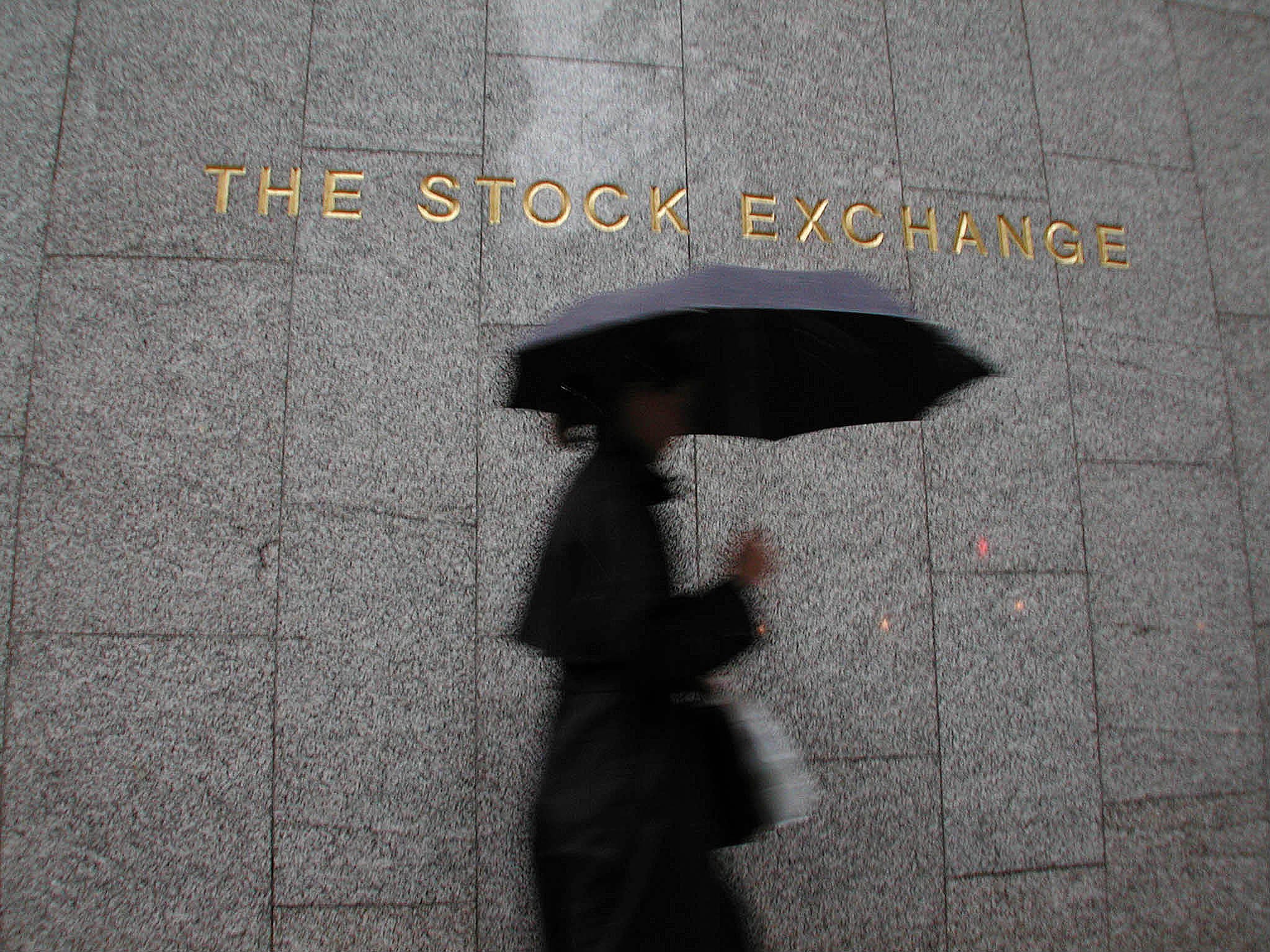
British economists are enjoying a good news story today after the FTSE 100 hit a record high, signalling soaring investor confidence in the UK stock market.
In early trading this morning, Britain’s flagship stock index smashed through the 9,000-point threshold for the first time in its 41-year history, taking its gains during 2025 to over 10 per cent.
It’s been a standout year so far for UK stocks, which have outpaced their European and US peers. Why so?
The London stock market has at times been dismissed as a “Jurassic Park” index, owing to its shortage of fast-growing tech companies. But, in a highly volatile era, its reliance on companies in long-established industries has proven to be a strength too. Indeed, as AJ Bell investment analyst Dan Coatsworth told The Guardian today, “The UK stock market is the calming cup of tea and biscuit in an uncertain world. There’s nothing fancy on offer, just reliable names that do their job day in, day out. That’s an underrated characteristic”.
UK stocks have benefited from a range of other factors too this year. And Donald Trump has no small part to play.
A silver lining of the US President’s erratic policymaking is that it has prompted global investors to diversify away from US shares - and UK-listed firms have been a key beneficiary.
Britain is also one of the few countries to have reached a trade deal with the US, while the EU continues to face the threat of 30 per cent tariffs from Washington. This has given the London market a competitive advantage over its European peers, with investors viewing the UK as a comparatively safe haven.
Currency has played a part too in driving up Britain’s flagship stock index. The FTSE 100 has been helped by a weaker pound, which makes the overseas profits of many UK-listed companies worth more in pounds.
As for specific shares that have helped drive the trend, the precious metals producer Fresnillo has been the top performer on the FTSE 100, up by 155 per cent this year, largely thanks to the surging price of gold which has hit several record highs in 2025. Silver is also trading at a 14-year peak this week.
Defence stocks are another of London’s strong performers. NATO’s pledge to beef up military spending has pushed up shares in the defence contractor Babcock by 120 per cent since the start of the year, while Rolls Royce - a major player in the military aero engine market - has climbed by 77 per cent.
Although the FTSE 100’s record performance suggests a stellar year for the UK stock market, there are caveats to this good news story.
Despite investors pouring into UK-listed companies, the London Stock Exchange is still struggling with an exodus of high-profile companies.
Last month, Wise, considered a British fintech darling, confirmed its decision to switch its primary stock market listing from London to New York. In the same week, the drugmaker Indivior announced that it was abandoning its secondary listing on the London Stock Exchange, solely maintaining its primary listing on the Nasdaq. Meanwhile, retail behemoth Shein is filing for an IPO in Hong Kong amid a drawn-out battle with UK regulators.
Even more worrying are the rumblings that AstraZeneca, the UK’s most valuable company, is considering moving its listing from London and heading across the Atlantic.
Read Maggie Pagano in Reaction for more on the reasons behind London’s slow burn as one of the world’s great financial cities for IPOs. In a nutshell, the UK has a punitive tax regime which favours debt rather than equity including high stamp duty on share-buying. And private equity money from the US has led to a takeover buying frenzy of UK companies on the cheap.
Isaac Goldring, also writing recently in Reaction, predicts that, for as long as Trump reigns with an iron first, portfolio managers will de-risk themselves from US assets, meaning we will continue to see a mass exodus of investment from American shores.
But, he adds, it’s not enough for the UK to simply capture this investment. It should then be using it as an incentive for companies to list in London and strike inflated valuations.
Ultimately, concludes Goldring, without a massive overhaul of the UK's overbearing regulators to create a more streamlined process for listing in London, companies will continue to be deterred from Britain’s shores.
A ripe topic for the Chancellor when she dines with the cream of the City’s crop at Mansion House tonight.
In her much-hyped Mansion House speech, Reeves is set to announce a raft of measures which aim to double the growth rate in financial services exports over the next decade, by easing regulation that UK businesses complain is weighing on activity. The Chancellor claims that her regulatory shake-up will amount to “the widest set of reforms to financial services in more than a decade”.
Caitlin Allen
Deputy Editor
ON REACTION TODAY
Adam Boulton
Donald Trump's golf imperialism

Anthony Peters
A government’s most valuable asset is its inflation option

ALSO KNOW
Fresh doubt cast on Lucy Letby conviction - Stephanie Davies, a senior coroner’s officer who first reviewed the deaths of babies at the Countess of Chester hospital for Cheshire police in 2017, has said that she now believes Lucy Letby has suffered a miscarriage of justice. Davies said she has become increasingly alarmed since December, when she learned that the hospital doctors had not reported a key medical procedure on one of the babies to the coroner at the time.
Netanyahu’s razor-thin majority - Israel’s ultra-Orthodox party, United Torah Judaism, has quit the country’s fractious right-wing coalition government in protest over a new conscription bill, amid a long-running dispute over mandatory military service. The move threatens Prime Minister Benjamin Netanyahu’s hold on power, leaving him with a one-seat majority in the Knesset.
DOJ urges Supreme Court to reject Maxwell appeal - The US justice department has asked the Supreme Court to reject Ghislaine Maxwell’s bid to overturn her 20-year federal prison sentence for recruiting girls and young women for Jeffrey Epstein.
Ceasefire in Sweida - Syria’s Ministry of Defence has declared a “complete ceasefire” in the Druze-majority Syrian city of Sweida, saying an agreement has been reached with the city’s “notables and dignitaries” after days of deadly clashes with Bedouin tribes. The announcement came shortly after the ministry deployed government forces to halt the violence that has killed dozens since Friday. The Israeli air force also conducted airstrikes in Sweida this morning, with Israel Katz, the defence minister, saying: “We will not allow harm to the Druze in Syria.”
FIVE THINGS
The FT on the British state’s battle to contain the fallout from the catastrophic Afghan data leak
New Lines on apartheid’s unpunished killers
How we got the dodo so absurdly wrong, in BBC Future
How Australia stopped grooming gangs, in COMPACT
The real reason Trump suddenly sounds tougher on Russia, in The Atlantic